City escapes
Brussels Comic Strip Walk: Queer Art and Stories in the City Centre
Follow the city’s comic-book walls towards queer visibility, community life and remembrance, with time to look beyond the most familiar characters.
Article updated 22 October 2026
In Brussels, a city walk can turn into a comic strip. Characters climb across walls above ordinary streets, while a short detour brings you to public art about queer visibility and remembrance. For LGBTQ+ travellers who enjoy looking closely, these places offer a satisfying theme for a day in the centre.
This Brussels comic strip walk links a few well-chosen outdoor stops with the area around Rue du Marché au Charbon. You can add the Comic Art Museum when its opening days fit, or keep the day entirely outdoors. It is a suggested selection, rather than an attempt to complete the city's whole mural trail.
Your Brussels comic strip walk at a glance
- Begin at Grand-Place to orient yourself in the historic centre.
- Find Tintin on Rue de l'Étuve, using the City of Brussels mural map.
- Continue to Out in the Street on Rue de la Chaufferette for a direct connection between comics and LGBTQ+ visibility.
- Make time for Love Remembers, a separate public-art project with a memorial purpose.
- Choose your final chapter: a community-focused evening around RainbowHouse, or a museum visit earlier in the day.
Save the locations before setting out and check the walking connections on a current map. There is no fixed completion time here: a pause in a square, a longer look at a mural or a meal can change the shape of the day. Our Brussels destination guide gives you the wider city context.
Start with the official mural map
The City of Brussels Comic Book Route website provides a map with individual mural entries, including their locations and creators. It also separates routes through the centre and Laeken. Start with the centre for this outing; the existence of a citywide trail does not mean every wall belongs in one walk.
Use the map to choose a small group of works you actually want to see. A familiar character can be an enjoyable starting point, but the information beside each location helps you discover an artist or story you did not already know. Keep enough space in the plan to stop without blocking entrances or narrow pavements.
Visit Brussels' comic strip trail overview includes a historic-centre route and explains the contextual texts added to some older murals. Where a QR code is available, read the accompanying interpretation. Comic heritage can reward both affection for a character and a critical look at the assumptions in the work.
From Grand-Place to Tintin on Rue de l'Étuve
Begin with a look around Grand-Place before following your saved route to the Tintin wall. Keeping this first part simple gives the day a clear starting point without turning the square into another attraction to rush through.
The City's Tintin mural entry places it at 37 Rue de l'Étuve. It identifies the scene as an extract from The Calculus Affair, with Tintin, Snowy and Captain Haddock on a fire escape. The entry also discusses Hergé's work and the criticism of stereotypes in his earlier stories.
Look at how a panel changes when it occupies a building wall: the figures' movement, the scale and the relationship with the surrounding street. You do not need to know every album to enjoy the image. If you are travelling with a comics enthusiast, this is a good moment to let one story lead the conversation rather than trying to identify every character on the trail.
Out in the Street: queer visibility in comic form
Continue to Rue de la Chaufferette, also called Lollepotstraat. Visit Brussels lists Out in the Street there and identifies the cartoonist Ralf König as its creator. This is the stop that gives the outing its clearest LGBTQ+ comic-art connection.
RainbowHouse's account of its public-art projects explains the work through LGBTQI portraits, humour and challenges involving visibility and stereotypes. Its project history also names artist Fotini Tikkou. Read that background alongside the wall rather than treating a rainbow-related image as decoration alone.
Give yourself time to look across the work and notice who is represented. A comic can make a public statement through ordinary gestures and exaggerated expressions as well as explicit slogans. This stop is also a reason to broaden a Brussels cultural itinerary beyond the best-known fictional heroes.
Love Remembers: make room for a different kind of stop
For a further public-art visit, locate Love Remembers at 36 Rue Saint-Christophe / Sint-Kristoffelsstraat, beside the Théâtre des Riches-Claires. RainbowHouse describes it as a work by Anthea Missy commissioned in memory of Ihsane Jarfi and victims of LGBTQI+ phobic discrimination.
This is a separate mural project, with a different purpose from the comic-book walls. RainbowHouse's account explains that Ihsane Jarfi was murdered in Liège in 2012 and that the portrait was inaugurated in 2018. Keep that memorial context in view when deciding how to photograph or discuss the work.
You can make this the last outdoor stop and pause afterwards, rather than treating every location as an interchangeable photo opportunity. The combination of humour, visibility and remembrance is what makes this selection more than a hunt for colourful walls.
Add the Comic Art Museum when the day fits
If you want an indoor chapter, consult the Comic Art Museum's practical information before arranging the day. As checked on 22 October 2026, its regular opening is Tuesday to Sunday, 10am–6pm, with last admission at 5pm. The address is 20 Rue des Sables. Check the page again for exceptions on your date.
The museum says individual visitors do not have to book online, and an advance ticket does not provide a fast-track entrance. Its exhibition texts are in French, Dutch and English. Use the current exhibition programme to decide whether you want a substantial visit rather than squeezing it between outdoor stops.
For a museum-focused day, visit it first and shorten the walk afterwards. For an outdoor-focused day, save it for another visit. If you arrive on a Monday, check the actual opening arrangements rather than assuming a museum will always be available as a rain plan.
Let the evening connect with local community life
RainbowHouse is at 42 Rue du Marché au Charbon. Its services overview describes the bar and community information activities, while its website links to the calendar and member associations. Check the activity, opening information and any participation conditions that fit your evening.
A bar visit, a public event and an organisation's support service serve different purposes. Look for the format you want, and do not assume every association meeting is open to visitors. If your interest is a particular community or language, the association descriptions can be more useful than a general nightlife list.
There is no requirement to end the day late. A meal and an early return can leave more room for the things you have seen. The centre's LGBTQ+ spaces are part of living community life, not just an itinerary endpoint.
Choose accommodation around your whole Brussels trip
Compare your arrival station, luggage arrangements and evening plans before choosing a base. The Dominican and Pullman Brussels Centre Midi are two properties in the Gaylidays catalogue to research. Open their location information and check the journeys you expect to make; they should not be treated as interchangeable bases.
Ask your chosen property about the practical details that matter to you, including check-in and room arrangements. Our LGBTQ+ friendly hotel booking guide suggests useful questions. A destination label or a visible queer scene does not establish an individual property's policies.
Before leaving, save the mural map, check any museum or event you plan to enter, and leave one part of the day unfilled. Brussels' comic walls are a starting point for noticing the city, with queer public art adding stories that deserve time of their own.
Sources and visitor information checked on 22 October 2026. Use the linked official pages for current opening arrangements, exhibitions and community programmes.
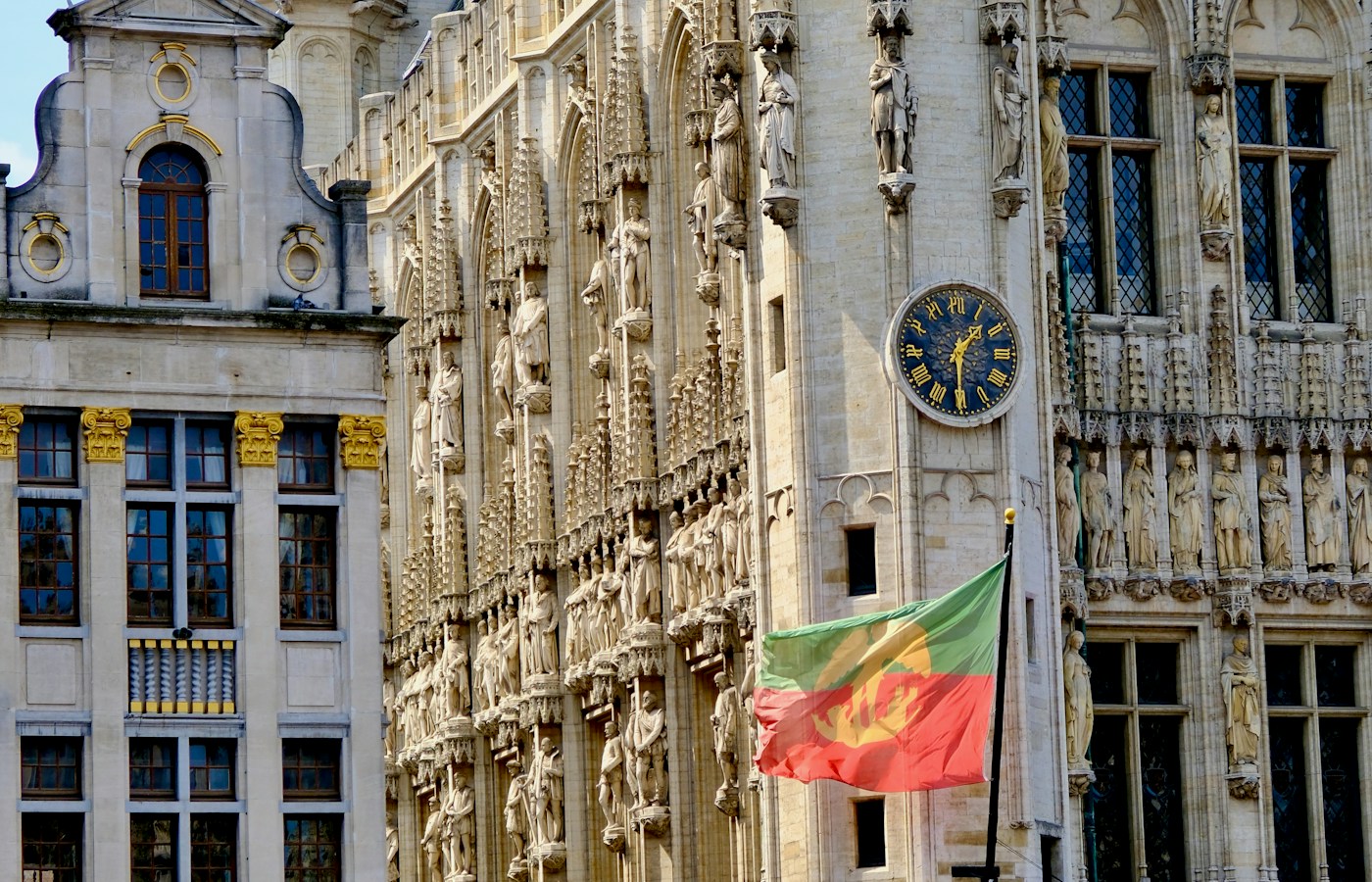
Cover photograph: Samuel Isaacs on Unsplash, used under the Unsplash License. The image shows architectural details at Grand-Place, rather than a mural on the walk.
KEEP EXPLORING
Discover the destinations behind the stories