Travel inspiration
Is Greece Gay Friendly for LGBTQ+ Travelers? Marriage and Local Life
City days, island evenings and a stay that suits your pace: a thoughtful way to explore Greece as an LGBTQ+ traveller.
Article updated 14 October 2026
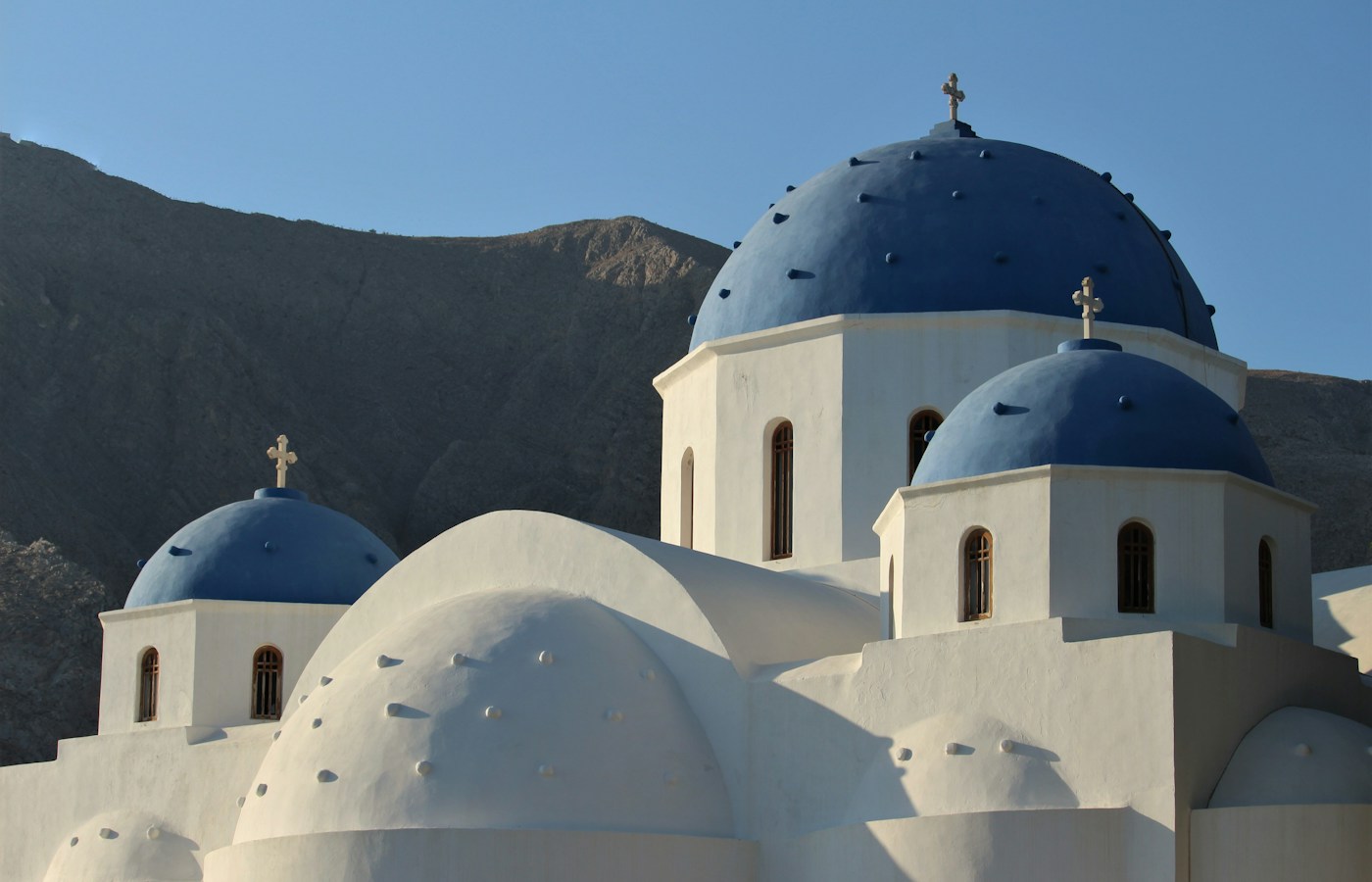
A few days in Athens, an island stay and time to linger over dinner: Greece offers several ways to shape an LGBTQ+ holiday. Choosing between them starts with the pace you want, then the welcome and practical details that matter to you.
The national legal framework is one part of that decision. Local attitudes, accommodation and the season add another. This guide brings together destination ideas, legal and survey information, hotel checks and sources to help you plan with more context.
At a glance
- Greece legalized civil marriage for same sex couples and adoption in 2024, but religious institutions need not host or bless ceremonies.
- Greece scores 68% on legal policy, while 63% of surveyed LGBTQ+ residents often or always avoided holding hands with same sex partners.
- FRA figures describe residents, not visitors; choose Athens or Mykonos for nightlife, Eressos for sapphic community, and quieter islands for mixed rather than dedicated scenes.
- Mykonos peaks from June to September, with August busiest; September offers a balance, while quieter months may bring closures among bars and beach clubs.
- Rural accommodation can refuse same sex couples, so confirm the bed setup and welcome policy in writing, especially when booking a small guesthouse.
The legal context before you travel
Greece’s legal picture is strong, and it matters for travelers in practical ways: it shapes how police, employers, hotels and officials are expected to treat you. In 2024, Greece legalized same-sex civil marriage and adoption, as CBS News reported. The law confers civil marriage rights, but religious institutions are not required to host or bless marriages. So the answer to “can gay couples marry in Greece?” is yes, in a civil ceremony, and a church wedding is a separate matter that depends on the institution.
For visitors, the legal baseline looks like this, according to GOV.UK’s Greece country advice:
- Same-sex sexual activity is legal, and the age of consent is 15 for all partners.
- Civil unions have been legal since 2015, and civil marriage followed in 2024.
- Transgender people can change their legal gender.
- Anti-discrimination and hate-speech laws apply to gender identity.
Euronews also noted that Greece banned conversion therapy for minors in 2022, which sits alongside the 2024 marriage reform in its coverage of the UK travel advice. Taken together, these changes put Greece well ahead of many neighbors on paper.
ILGA-Europe’s Rainbow Map 2026 gives Greece a 68% legal-policy score, describing it as legally welcoming but socially variable. That phrase is a useful lens for the rest of this guide. A high legal score tells you the framework protects you. It does not guarantee that every village taverna, family-run guesthouse or taxi driver shares the attitudes of Athens city hall.
A few legal nuances are worth knowing before you plan. Civil marriage rights do not oblige a church to offer a blessing, so couples who want a religious ceremony should not expect one. Rules on surrogacy and some family-law matters remain more restrictive than the headline reforms suggest, so couples planning a family journey should check specifics with a qualified legal professional rather than assuming parity across every area. For a short holiday, though, none of this affects what you can do: booking a double room, walking into a bar or sharing a beach towel is not a legal question.
The practical reading is simple. Legal progress means that if something goes wrong, such as discrimination or an assault, you have a framework to lean on. It also explains why Athens and the island hubs feel relaxed: the law, the tourism industry and a visible local community all point the same way. The gap between law and daily life is what the next section covers, because it is where realistic expectations come from.
One more point on how to use this information. Legal status tells you what is protected, but not what is typical. When you compare destinations, treat the law as a floor and use social data, local reports and hotel signals to judge the ceiling. That approach is also the idea behind our GLD Index, which weighs legal rights alongside acceptance and visibility instead of looking at statutes alone.
If you are traveling with a partner, carry proof of your booking and photo ID in both digital and paper form. You are unlikely to need marriage documents, but keeping paperwork organized makes any hotel or official interaction smoother. The sections below turn the legal baseline into day-to-day expectations.
Beyond the legal picture
Survey data shows why “legally welcoming, socially variable” is the right summary. The EU Agency for Fundamental Rights (FRA) country factsheet for Greece reports that 63% of respondents often or always avoided holding hands with a same-sex partner, according to the FRA LGBTIQ survey factsheet. That is a striking number for a country that has just legalized marriage, and it tells you how much daily caution many local LGBTQ+ people still exercise.
The same factsheet adds more detail:
- 36% avoided certain locations for fear of assault.
- Only 35% were fairly or very open about being LGBTIQ.
- Reporting rates to police or equality bodies are low compared to EU averages.
These figures describe residents, not tourists, and they come from a survey of LGBTIQ people living in Greece. Visitors usually move through the most tourist-oriented places, stay in hotels that want their business and are not navigating family, workplace or small-town dynamics. Still, the numbers are a fair signal that visibility is not uniform and that public affection can draw attention in some settings.
Geography matters most. GOV.UK’s LGBT travel advice says accommodation attitudes can vary, that rural properties can sometimes refuse same-sex couples, and that travelers should research local attitudes before heading to quieter areas. The Greece-specific advice adds that public attitudes vary and that public affection may be frowned on, especially in rural areas, as the GOV.UK safety and security page puts it. Euronews summarized the same advice as a warning about possible discrimination in parts of Greece, while noting that Athens and many islands are more welcoming.
So how should you read these figures for your own trip? Three habits help:
- Separate residents from visitors. Locals face family and workplace pressures that a week-long traveler does not.
- Match your itinerary to your comfort level. If holding hands openly matters to you, base yourself where the scene is visible, such as Athens, Mykonos or Eressos.
- Treat low reporting rates as a reason to know your options before you travel, not as a reason to stay home. Save emergency numbers and keep booking records so you can act quickly if needed.
Use both the national picture and local information to set expectations for the places you will actually visit. You can be openly yourself in many places and still decide, village by village, how much affection feels right. That judgment call is normal for LGBTQ+ travel almost anywhere, and Greece is easier than many countries on that front.
City days and island stays
Visit Greece’s own LGBTQ+ guide highlights Athens, Thessaloniki, Mykonos, Lesvos, Skiathos, Crete’s Chania and Heraklion, Santorini, Milos, Astypalea, Zakynthos and Corfu as friendly or popular destinations. Here is how the main ones differ, so you can match them to your interests.
- Athens: The broadest urban LGBTQ+ community and nightlife in the country. The Gazi district is the usual starting point for bars and clubs, and the city works well as an arrival point before or after the islands.
- Mykonos: The best-known gay nightlife and beach destination in Greece. Mykonos Town has the bars and hotels, and Elia Beach is the beach most associated with gay travelers. The Globetrotter Guys describe it as a top gay destination in their Mykonos guide.
- Thessaloniki: Like Athens, it offers a large urban community and nightlife, with a more local and less resort-driven feel.
- Lesvos (Eressos): Especially associated with lesbian and sapphic travel, as noted by Visit Greece. The BBC’s long-form travel piece also profiles Eressos alongside Mykonos, Athens and Thessaloniki as strong queer scenes.
- Crete (Chania and Heraklion): Quieter than the party islands, with historic old towns and beaches, and a relaxed atmosphere for couples.
- Santorini: Romantic and scenic, popular with couples, with less of a dedicated gay scene.
- Corfu and Skiathos: Easy-going resort islands with beaches and a mixed crowd, good for travelers who want a low-key holiday.
If you are deciding where to go, work through it in this order:
- Decide what you want most: nightlife, beaches, a sapphic community, a romantic escape or culture.
- Pick one anchor destination that fits, such as Mykonos for nightlife or Eressos for community.
- Add Athens for a first or last stop, since it has the widest range of venues and hotels.
- Choose a quieter island such as Crete or Corfu if you want rest between busier stops.
- Check the season for each place before you book, because visibility changes sharply between August and the shoulder months.
For beaches, our guide to the best gay beaches in the world puts Greek options in a wider context, with Elia Beach as the standout in Mykonos. If you want something calmer, our piece on LGBTQ+ destinations that feel different can help you think beyond the obvious names.
Visibility follows the same pattern as the survey data. In Athens and Mykonos you will see queer venues, couples and rainbow flags as part of ordinary life. In Eressos the sapphic identity of the village is part of its draw. On Crete, Santorini, Corfu and Skiathos you can travel comfortably, but the scene is mixed rather than dedicated, so you set the tone yourself.
A useful way to plan is to treat Greece as two trips in one: a visible, social trip based around Athens and Mykonos, and a quiet, scenic trip on the other islands. Many travelers combine them, spending a few days in the capital, a few at the beach parties, and a few somewhere calmer. Moving between ferry ports and airports is straightforward, and each hop lets you adjust how social you want to be.
Finding your rhythm on arrival
Day to day, Greece is warm, hospitable and curious, and most tourist-facing people care more about good service than anyone’s relationship. The main difference from the most progressive European capitals is how public affection is received.
In Athens, Mykonos Town and Eressos, couples holding hands rarely draw attention. In smaller towns and villages, the same gesture may get a glance, and GOV.UK notes that public affection may be frowned on, especially in rural areas. That is not a reason to hide; it is a reason to read the room.
Religion shapes social attitudes. The Greek Orthodox Church remains influential, and the 2024 reform did not oblige it to bless same-sex marriages, as CBS News explained. This is social context rather than a legal restriction: you are very unlikely to meet hostility in a church while sightseeing, but you should dress and behave respectfully at monasteries and churches, as every visitor is expected to.
Here are some practical points for meeting people and going out:
- Nightlife in Gazi, Mykonos Town and similar hubs is relaxed and international, so you can dress and act as you would at home.
- Dating apps work in Greece, but use the same care as anywhere: meet in public first, tell a friend where you are going, and be more discreet in rural areas where local users may not be out.
- Learning a few Greek words, such as kalimera (good morning), efharisto (thank you) and parakalo (please or you’re welcome), earns instant goodwill.
- Staff at gay-popular bars and hotels are used to LGBTQ+ guests, so you can ask for recommendations without hesitation.
- Outside the resorts, follow the local pace: Greeks are sociable, and a friendly greeting opens most doors.
Worth keeping in mind If you are unsure how a village will respond, take your cue from locals for the first evening. Watch how couples behave in the main square, then decide how affectionate you want to be.
Remember that tourism is central to the Greek economy, and most businesses are eager to welcome all guests. Experiences vary, and a destination’s reputation cannot predict every interaction. A flexible plan gives you more options if the welcome or surroundings do not meet your expectations.
Practical checks before departure
GOV.UK frames the right posture as ordinary travel caution plus LGBTQ+specific situational awareness. In practice, that means a few preparation steps and a few habits on the ground.
Before you go, work through this checklist:
- Verify each hotel’s policy. GOV.UK warns that attitudes at accommodation vary and some rural properties may refuse same-sex couples, so confirm your booking in writing and look for explicit welcome language.
- Buy travel insurance that covers medical care and cancellations, as GOV.UK recommends.
- Save the local emergency number and your embassy’s contact details in your phone and on paper.
- Make digital and paper copies of your passport, bookings and insurance, and keep them separate from the originals.
- Research local LGBTQ+ groups and venues for your destinations, which also helps you find community and current advice.
- Check local attitudes before visiting rural areas, and decide in advance how you will handle public affection there.
- Tell someone back home your itinerary and update them if it changes.
On the ground, a few habits help:
- Stick to well-lit, busier routes at night, as you would anywhere, and use licensed taxis or pre-booked rides.
- Keep your drinks in sight in bars and clubs.
- If someone harasses you, move away, stay calm and head to a staffed public place. Do not escalate.
- For urgent incidents, use local emergency services and report serious discrimination or assault, and keep booking records and identification details to hand when seeking help. GOV.UK gives this exact guidance.
- If you are in Greece and need consular help, contact your embassy.
The FRA data shows reporting rates are low, which is another reason to know the process in advance. Reporting an incident helps you get support, and it helps authorities see that these incidents occur. If you feel uncomfortable going to the police alone, ask your hotel to help you make the call or find a local LGBTQ+ organization.
Worth keeping in mind Screenshot your booking confirmations and hotel addresses, and save them in an offline folder. If your phone dies or you lose signal, you can still show proof of your stay.
None of this should dominate your holiday. Most trips to Greece involve nothing more than sunshine, ferries and good food. The checklist exists so that if something unusual does happen, you are prepared rather than caught off guard.
Choose the season for the experience
Timing changes the experience dramatically. The Globetrotter Guys recommend June to September for peak gay events in Mykonos, with August the busiest, including the Xlsior festival. The BBC’s travel feature cites festival attendance figures as evidence of how visible queer tourism is on the island.
Summer and shoulder season offer different benefits:
- Peak summer: A lively period, with parties, crowds and visible LGBTQ+ nightlife. Prices and demand are also at their highest, so book hotels early.
- Shoulder season: Often offers warm weather, fewer crowds and plenty of activity, though conditions vary by destination. Many travelers find this the best balance.
- Shoulder and off-season: Quieter, cheaper and more relaxed, but some bars and beach clubs close, so you will find a smaller scene. This can suit discreet or low-key travelers.
- Lesvos (Eressos): Known for sapphic gatherings in the summer season, so check dates if you want to join a festival.
- Athens and Thessaloniki: Nightlife runs for much of the year, which makes them reliable city-break options outside the island season.
A few highlights by place:
- Mykonos: bars in Mykonos Town, beach days at Elia Beach.
- Athens: Gazi for clubs and bars.
- Eressos: community-focused beach life.
- Thessaloniki: a smaller, more local scene.
If you are coming for a romantic trip rather than nightlife, our list of the most romantic LGBTQ+ destinations can help you decide when and where to go. Overall, choose peak summer for energy, September for balance and quieter months for calm.
How do you choose an LGBTQ+friendly hotel in Greece?
A hotel is where you will feel the most direct effect of local attitudes, so a few checks before booking are worth the effort. GOV.UK notes that accommodation attitudes vary and that you should check individual hotels, particularly rural ones.
Use this checklist:
- Look for explicit welcome language on the hotel’s own site or listing, such as a statement that all couples are welcome.
- Confirm the bed setup when booking a double, and ask by email if you want a written reply.
- Check whether bathrooms are private or shared, especially in small guesthouses.
- Read how hosts communicate: quick, friendly, clear answers are a good sign.
- Review cancellation and privacy policies so you can change plans if needed.
- Consider location. If nightlife matters, choose somewhere within easy reach of the bars; if you want quiet, look slightly outside the busiest areas.
- Read recent guest reviews for mentions of couples, and look for patterns rather than single comments.
Here is a quick yes/no guide to the signals worth looking for:
| Signal | Good sign | Warning sign |
|---|---|---|
| Welcome language | Explicit, all couples welcome | No mention, vague wording |
| Host replies | Fast and friendly | Slow or evasive |
| Reviews from couples | Positive, recent | Complaints about awkwardness |
| Bathroom setup | Private | Shared with no explanation |
| Cancellation terms | Flexible | Strict, no changes |
None of these signals is conclusive alone, but several good signs together are reassuring. Our curated shortlists apply this kind of reasoning for you, so you can explore options.
From destination context to a place to stay
At Gaylidays, we score cities and countries with the GLD Index, which looks at safety and inclusivity through legal rights, social acceptance and local LGBTQ+ visibility. Open the destination page to read the available context and recorded update information, alongside current official advice.
We pair that scoring with independent hotel shortlists that add LGBTQ+ context beyond what a generic filter can show. Read the information on each property and confirm the details that matter to your stay directly with the hotel. You can use our destination guides and hotel shortlists to move from this guide to a concrete plan, using the same ideas covered above: legal context, social reality and hospitality signals in one place.
A practical perspective on planning your trip
The most useful thing Greece teaches an LGBTQ+ traveler is that “friendly” is a spectrum, and your itinerary lets you choose where on it you want to be. Law and survey data tell different parts of the story, and the honest answer sits between them. A rural statistic should not be treated as a description of every island, just as Mykonos should not stand in for every village. Pick your base deliberately, confirm your hotel in writing, and let the first evening tell you how relaxed a place feels. Then enjoy it.
Book your LGBTQ+aware stay in Greece with our hotel shortlists
If this guide has helped you narrow down where to go, the next step is choosing where to sleep. Our Gaylidays hotel shortlists bring together curated stays, with GLD Index context so you can see how destinations score before you commit. Browse the destination pages, compare stays for your dates and confirm the room details before booking.
Start with the destination you have in mind, then take time to compare the options for your dates.
This article is general information, not a substitute for advice from a qualified lawyer. Consult a qualified legal professional about your own circumstances before acting on anything here.
A few questions before you go
Can gay couples marry in Greece?
Yes. Greece legalized same-sex civil marriage and adoption in 2024, as CBS News reported. The law covers civil ceremonies, and religious institutions are not required to host or bless them.
Is it safe to be openly gay in Greece?
In Athens, Mykonos and other tourist hubs, most travelers find it comfortable to be open. Attitudes can be more reserved in rural areas, so GOV.UK advises ordinary caution plus awareness of local attitudes.
Does the Greek Orthodox Church accept gay people?
The Church is influential in Greek social life and is not required to bless same-sex marriages under the 2024 civil law. This is a social and religious matter rather than a legal restriction on visitors, and respectful behavior at religious sites is expected of everyone.
What should I check before booking a hotel in Greece?
Look for explicit welcome language, clear host communication and recent reviews from couples. GOV.UK notes that attitudes at accommodation can vary, particularly in rural areas, so confirm your booking in writing.
Sources
- LGBTQ+ friendly Greece
- GOV.UK travel advice
- Rainbow Map 2026
- LGBTIQ Survey-Country factsheet-Greece
- Greece becomes first Orthodox Christian country to legalize same-sex civil marriage, adoption - CBS News
A little more inspiration
- LGBTQ+ Destinations That Feel Different
- The Most Romantic LGBTQ+ Destinations in the World (2026)
- The Best Gay Beaches in the World In 2026
KEEP EXPLORING
Discover the destinations behind the stories