City escapes
Melbourne by Tram: Free Zone Rules and a First-Day Plan
Know where the free ride ends, when to pay and how to explore beyond the CBD for your first day in Melbourne.
Article updated 5 November 2026
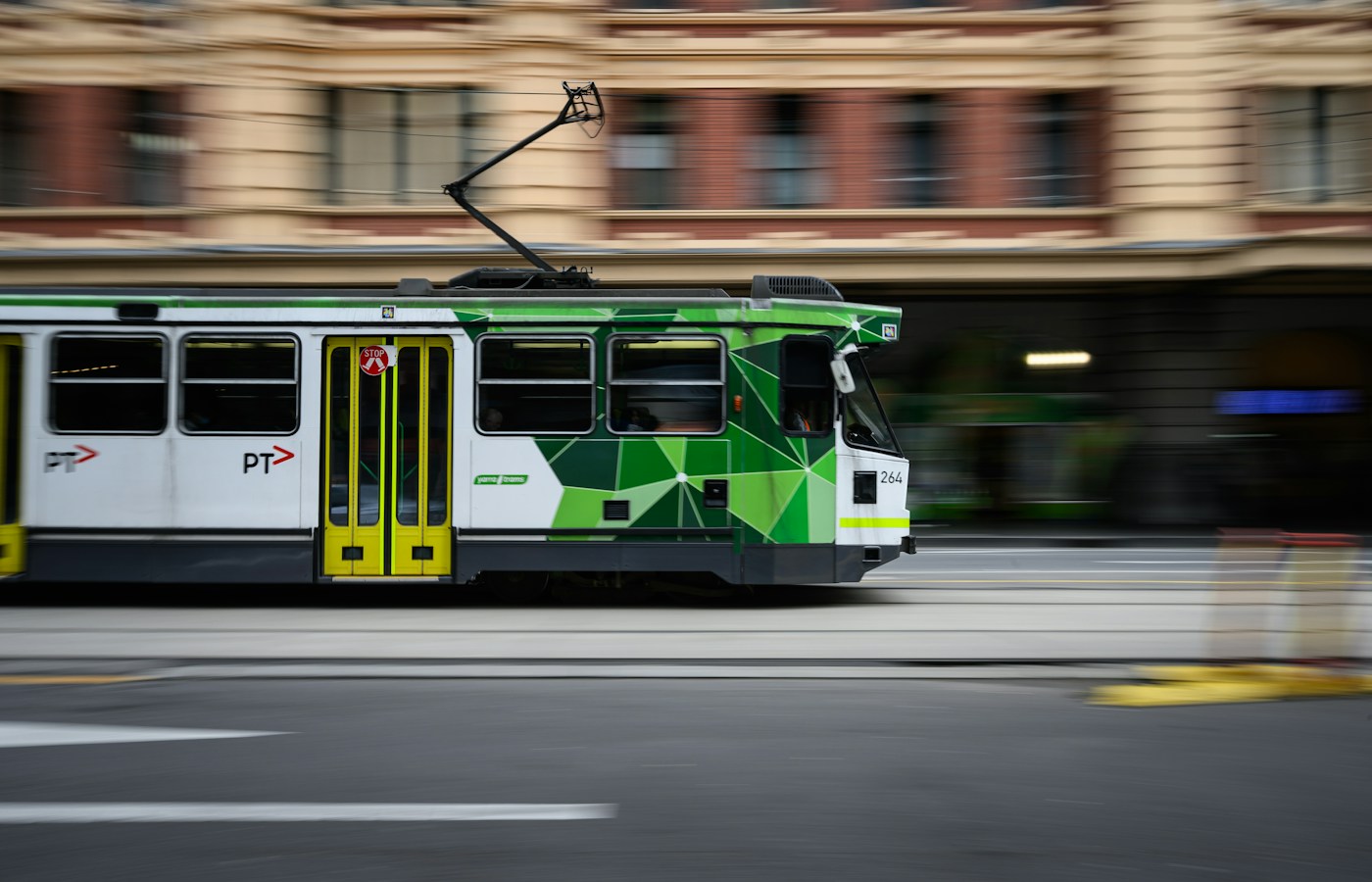
A tram rolls past Flinders Street Station, bells sound at an intersection, and Melbourne suddenly feels easy to explore. The useful detail is knowing where the free ride ends. The Free Tram Zone is a central-city convenience, rather than a ticket to every neighbourhood you might want to visit.
For LGBTQ+ travellers, that distinction matters: a day of laneways and waterfront wandering can fit around the centre, while an evening in Fitzroy or a visit to St Kilda needs a separate transport plan. Start with our Melbourne destination guide, then use the tram rules below to organise your first day.
Understand the Free Tram Zone before boarding
The zone covers the CBD and Docklands. If your tram journey starts and finishes inside it, you do not need a myki and should not touch on or off. This applies to regular trams travelling within the zone, not just the heritage sightseeing service. See Transport Victoria’s free-travel guidance.
Use the City of Melbourne’s map collection to check the actual boundary before you travel. Save the Free Tram Zone map on your phone. A destination described as central can still require a paid ride; do not use the CBD skyline as your fare boundary.
The simplest habit is to decide your exit stop before boarding. If either end of the trip lies outside the zone, arrange a valid fare for that journey. Avoid assuming that boarding in the free area makes the whole ride free.
Choose City Circle for sightseeing, not a tight connection
The City Circle is route 35, a free heritage tram with commentary. Visit Victoria describes a clockwise route around much of the CBD, taking in streets including Flinders Street, Spring Street and La Trobe Street, with a Docklands section. It is an appealing introduction when the journey itself is part of the outing.
Use the official route 35 timetable for the day you travel. A heritage sightseeing circuit is a different proposition from the quickest tram between two appointments. Leave room to get off, walk and catch another service rather than treating a full circuit as a fixed-duration attraction.
For a first afternoon, choose one central area to explore on foot and use a tram to change scenes. You will get more from stopping for a coffee or looking into a laneway than from trying to photograph every landmark through a window.
Know when to use myki
A myki is a reusable public-transport smart card. It remains an option for visitors who want a dedicated travel card; the official visitor transport guide explains both myki and current contactless payment options. Check that guide for the mode of transport and fare type you intend to use rather than relying on older advice that bank cards are never accepted.
With myki, a Zone 1 tram trip requires touching on, but not touching off. Trains and buses have different rules, as do tram journeys wholly within Zone 2. Transport Victoria’s touch-on and touch-off instructions are the reference for those distinctions. For a tram trip wholly within the Free Tram Zone, leave the reader alone.
Do not assume that every sightseeing journey is free simply because it is short. Check the stop and zone in the official journey planner, and keep your chosen payment method ready before boarding a paid service. For exact fares and temporary offers, consult the operator close to departure instead of budgeting from an old screenshot.
Plan beyond the centre for queer Melbourne
Melbourne’s queer life does not sit in one compact district. The official LGBTQIA+ city guide highlights South Yarra, Windsor, St Kilda and Fitzroy among its neighbourhoods for queer-friendly entertainment. These are reasons to explore beyond the free central tram area, rather than to make that area the limit of your stay.
Pick one neighbourhood for an afternoon or evening and plan the return journey at the same time as the outward trip. Fitzroy and Fitzroy Street in St Kilda are different places: search the exact venue address so that a familiar name does not send you to the wrong side of the city.
If your accommodation is outside the CBD, compare the journey from the hotel itself. The locations of Ovolo South Yarra and The Prince in St Kilda offer two different starting points; check their current listings against the places you actually want to visit. A free central ride is only one part of choosing a useful base.
A simple first-day transport plan
- Before leaving: save the zone map, check service disruptions and decide how you will pay for travel outside it.
- In the centre: combine walking with a tram journey that stays inside the boundary.
- For a scenic ride: check route 35’s current timetable and allow time to stop along the way.
- For the evening: choose a neighbourhood, look up the exact address and plan your return rather than assuming the sightseeing tram runs late.
Keep the first day deliberately manageable. Melbourne rewards a little unplanned time, and understanding the tram boundary makes it easier to leave the centre when something elsewhere catches your interest.
Transport information checked on 5 November 2026. Timetables, fares, payment options and service changes should be checked again before travel.
Photo: pen_ash / Unsplash, used under the Unsplash License.
KEEP EXPLORING
Discover the destinations behind the stories